According to a 2025 Lloyds Bank survey, 24% of UK taxpayers think all their savings are tax-free. Again, 55% of people couldn’t identify the current ISA allowance. But they may face unexpected penalties due to not paying taxes on their savings.
According to HMRC, interest on savings is taxable. No worries. You can reduce your tax on your savings by knowing and following some ways.
TAJ Accountants brought this blog for you to learn the HMRC tax laws on savings clearly, and to pay them on time.
3 Allowances Affect Tax on Your Savings
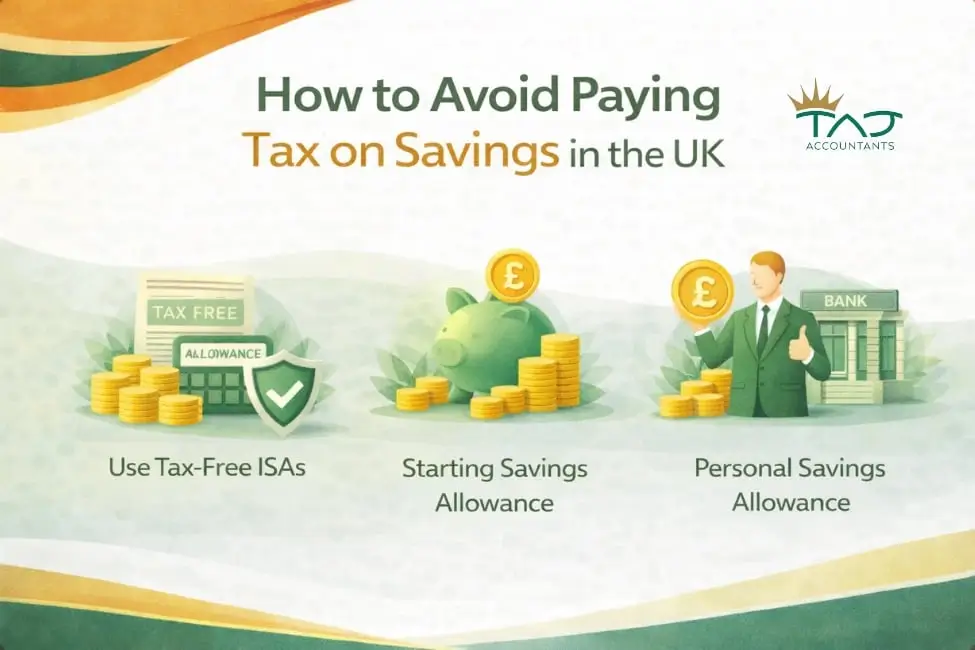
There are 3 types of saving allowances for earning interest that may affect which tax to pay. You get these allowances every tax year (6 April to 5 April)at different rates based on your other income. They are –
- Personal Allowance: When your interest is below the Personal Allowance, which is £12,570, you don’t have to pay tax.
- Starting Rate for Savings: Your starting rate for savings is £5,000, and you do not have to pay tax on this interest. The more you earn from other sources, the lower your starting savings rate will be. You’re not eligible for the savings starting rate if your other income is £17,570 or more.
- Personal Savings Allowance: You can benefit from your Personal Savings Allowance (PSA). You do not pay tax on this interest. PSA depends on the rate of income tax you pay. For the basic rate, you get up to £1,000 of interest and £500 for the higher rate. No interest in the additional rate.
What is Count as Interest?
According to HM Revenue & Customs (HMRC), “interest is the return or compensation for the use or retention by one person of a sum of money belonging to or owed to another.” Your interest in savings comes from:
- bank and building society accounts
- savings and credit union accounts
- unit trusts, investment trusts and open-ended investment companies
- peer-to-peer lending
- trust funds
- payment protection insurance (PPI)
- government or company bonds
- life annuity payments
- some life insurance contracts
Ways of Avoiding Paying Tax on Your Savings
It’s important to track how much interest you’re earning to minimise your tax on the savings. Follow these methods to avoid a tax bill when you reach the threshold.
Use Cash in an ISA
Interest on savings in an Individual Savings Account (ISA) is tax-free. You can save up to £20,000 per tax year (ending 5 April) in a Cash ISA. Moving some of your cash to an ISA is a logical step if you’re nearing the threshold for paying Income Tax on savings.
Use Personal Savings Allowance (PSA)
PSA is the amount of interest you can earn from your savings without paying income tax each year. It depends on your tax band. Basic rate taxpayers (20%) can earn up to £1,000 in interest per year tax-free, while higher rate taxpayers (40%) can earn £500. Additional rate taxpayers (45%) receive no allowance.
Starting Rate for Savings
The Starting Rate for Savings is an extra 0% tax band. It can apply to your savings interest up to £5,000 if your other income is low. It is designed to get people with less or no earnings from wages or pensions earn interest without paying tax on it.
Buy Premium Bonds
Held through NS&I, you can invest up to £50,000 in Premium Bonds. You will take up the chance of winning a prize draw each month instead of interest. If you win, it is tax-free. But there will be no guarantee of winning. You can withdraw your money anytime.
Transfer Savings to Spouse
If your partner earns less and you pay a higher rate of tax, you can transfer your savings into your partner’s account. In this way, you can maximise your unused personal savings allowances without paying more tax.
Use Pensions
When you have a large sum of cash in savings, you can consider holding a pension. Pension interest is tax-free. The aim of a pension is long-term growth. Remember that the investment is generally inaccessible until age 57.
Invest Your Savings
Another efficient way is investing your savings using your ISA annual allowance to place money into a Stocks and Shares ISA. But the returns of investment are not guranteed and the value of your investments may reduce. Again, returns on investments could be taxable if the value of investments rises.
Keep Savings for JISA
If your savings are reserved for your child, you can move the fund into their own Junior ISA (JISA). Keep in mind that you don’t get ss to the money placed in a JISA until the child turns 18. You can save up to £9,000 per year in a JISA.
Buy Gilts
Gilts are one of the safest types of tax-effective alternatives to savings accounts because any gain in value is free from tax. The UK Government take loan by issuing a bond, which is known as Gilts. Investors receive coupons (regular interest) payments twice a year and the full principal at maturity.
Invest in an Offset Mortgage
If you have a mortgage, using your savings to ‘offset’ your debt can be more tax-efficient than a standard savings account. An offset mortgage effectively gives you a tax-free return equal to your mortgage rate. It can be very tax-efficient for higher taxpayers.
Consider Tax-Exempt Savings Plans
Tax-Exempt Savings Plans (TESPs) are long-term savings policies offered only by friendly societies. It allows you to save up to £25 a month or £300 a year. Funds must be held for 10 years to avoid taxable gains. There are no age restrictions to hold tax-exempt policies.
How TAJ Accountants Will Help You?
These options will help you cut your tax bill today. But not all are fixed. All options are based on HMRC legislation of February 2026 for the 2025/26 tax year, which can change from one tax year to the next. Again, this is a general guide only for information purposes, not professional advice to make a decision.
If you want to take expert guidance, contact TAJ Accountants. We have an expert team to help you stay informed and updated with HMRC transparently. We have experience of 15+ years to provide tax services. Our expert members provide tax planning, collect documents, prepare tax & VAT returns, submit returns, and pay tax on your behalf.
Stay Updated
Get expert accounting advice tailored to your business needs
Conclusion
Understanding UK tax rules and how to save tax can reduce or eliminate the costly tax on your savings interest. It is crucial to stay informed and updated with changing tax laws. You can remain within tax-free thresholds by reviewing your savings regularly and making a plan.
If you still have any confusion, book a 15-minute free consultation session to get an expert callback.