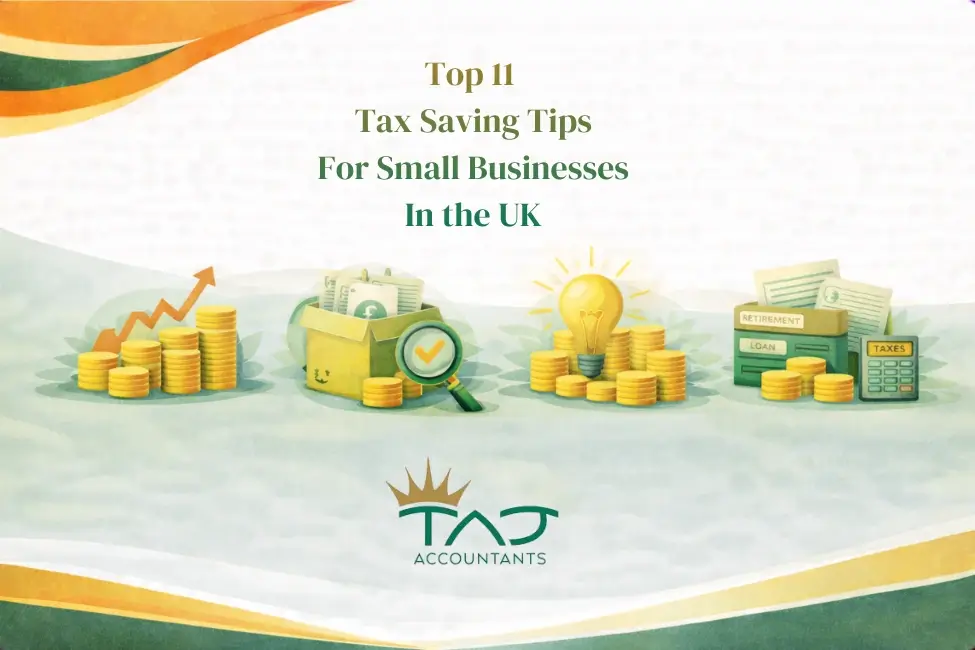
Are you looking for practical strategies to minimise your tax bill while keeping your business compliant with HMRC regulations? If yes, this blog will help answer your questions.
Operating a small business in the UK requires several tax obligations, including corporation tax, VAT, and allowable expenses. However, many business owners unknowingly pay more tax than necessary because they are not aware of the available tax reliefs and smart financial planning strategies.
Understanding how to structure your expenses, claim eligible deductions, and plan your finances effectively can significantly reduce your tax burden while keeping your business fully compliant.
At TAJ Accountants, we assist small business owners in understanding UK tax regulations and implementing effective tax-saving strategies to enhance financial efficiency and long-term growth.
Why is Tax Saving Important for UK Small Businesses?
Tax savings are crucial to strengthening the financial stability of small businesses in the UK. Many business owners focus mainly on generating revenue, but effective tax planning can significantly improve cash flow and profitability.
Businesses can lower their tax bills and keep more money on hand for daily operations by claiming allowable expenses, taking advantage of available reliefs, and organising their finances well.
This extra capital can help cover essential costs such as rent, wages, utilities, and supplier payments while maintaining smooth business operations. In addition, tax efficiency allows small businesses to plan for long-term growth and financial security.
By understanding available tax-saving opportunities, small business owners can strengthen their financial position and create a more sustainable and competitive business environment.
Top 11 Tax Saving Tips for UK SMEs
Tax saving tips help to make a business structure more tax-efficient to earn more profits. It reduces the business tax burden and keeps it totally compliant with UK tax legislation.
1. Choose the Right Business Structure
Most SMEs start their businesses as sole traders due to their simple structure, easy functionality, and fewer reporting requirements. Sole traders pay income tax at a higher rate than corporation tax. Also, Business owners have to take on all the risks and liabilities of covering business debts.
So, you can consider transforming into a private limited company. This reduces your personal liability, and you can enjoy paying less tax. Limited companies pay corporation tax on their profits, whereas sole traders pay income tax. This difference is crucial for a business’s financial growth.
Currently, UK income tax rates are as high as 45% for solo traders, whereas the highest rate of corporation tax is 25%. Though the tax liability will depend on the business’s profit levels.
2. Optimase Director Salary & Dividends
Sole traders have no option to choose their honorarium. The owner and business are considered as one legal entity. On the other hand, company directors and shareholders can take a lower salary and take the rest of their income as dividends from company profits. Salary is considered a personal allowance, and it is tax-free up to £12,570.
Dividend is tax-free up to £30,000; tax rates are lower than income tax rates, with a basic rate 39.35%. So this opportunity provides a more tax-efficient way to withdraw profits and helps to minimise a director’s personal tax liability.
Salaries and employers’ National Insurance Contributions (NIC) are tax-free. To protect your state pension, you need to fix your salary below the Lower Earnings Limit, which is currently £6,500. Also need to consider the national minimum wage and national living wage rules. This strategy reduces a business’s corporation tax liability.
3. Know Your Allowable Expenses
It is important to know which expenses you can claim in your business for sole traders and companies. These are known as allowable expenses. Your claimable expenses must be related to business purchase purposes.
Generally, expenses include costs relating to marketing, business travel, office costs, and stock due to operating the business. Keep all receipts and invoices of purchases. Use HMRC-compatible software to monitor all expenses accurately.
You can reduce the tax by claiming all allowable expenses from HMRC properly within the specific time frame. Choose one which maximises relief from different ways of structure for an expense.
4. Claim Capital Allowances
UK small businesses can save tax by claiming capital allowances on certain business assets. Capital allowances help to deduct the total or part of the asset value from business profits before calculating the tax. When businesses purchase machinery, vehicles, and technical equipment, they claim the value through specific tax relief schemes. It allows for a lower amount of tax.
Annual Investment Allowance (AIA) is one of the effective tax reliefs available to UK businesses. Businesses can deduct up to £1million of qualifying assets in a year to invest in equipment if necessary.
Make sure that assets are only used for business purposes, and keep the asset records in the business accounting books properly. Filing your tax return according to the HMRC guidelines to take advantage.
5. Increase Pension Contribution
Pension contributions are another most tax-efficient ways for a business to achieve long-term security. It is an allowable business expense and reduces the business’s corporation tax bills. If you are a self-employed business owner, you receive 20% basic rate tax relief automatically when paying into a pension. Plus, you can claim further relief if you are a higher or additional rate taxpayer.
Consider making company pension contributions instead of taking extra salary. You can contribute up to £60,000 per year into your pension without additional tax charges. Though its vary on the income level and pension arrangements. But remember, you won’t be able to withdraw your investment until you reach retirement age.
6. Choose the Right VAT Scheme
Choosing the right VAT scheme helps businesses calculate their VAT accurately. This reduces tax burden and improves cash flow management.
Select the most suitable VAT scheme depending on your turnover, business model, and cash flow situation. Review the VAT setup regularly to ensure the business remains tax-efficient as it grows.
The Flat Scheme Rate is lower than the standard 20% rate for a low expense business. It allows businesses to pay VAT as a fixed percentage of their total VAT-inclusive turnover to HMRC instead of every transaction.
The VAT Annual Accounting Scheme allows lower expense businesses to pay VAT after collecting the money from customers. Businesses can submit a VAT return once a year rather than quarterly.
7. Keep Accurate Records
To save tax, it is crucial to keep all expenses receipts and invoices records properly. It is possible to lose receipts when you do not pay for a purchase from your bank account, like purchase fuel.
HMRC introduced Making Tax Digital (MTD) to capture tax gaps, reduce paperwork, and make the tax system easier. You can quickly record and reconcile every transaction by using MTD-compatible software such as QuickBooks, Xero, and FreshBooks.
You can capture or scan a receipt using this software by connecting with your smartphone. When you link your expenses to a cloud software, you can apply your tax deduction strategy without any mistakes.
8. Understand UK Tax Rules Transparently
Having a clear understanding of UK tax rules helps businesses legally reduce their tax liability and avoid costly mistakes. When business owners understand how the tax system works and which tax band is appropriate to ensure the reliefs, allowances, and deductions, it reduces the tax burden significantly.
They can choose the most efficient tax structure, claim all legitimate tax advantages, and take advantage of tax planning strategies to avoid penalties or interest charges.
9. Use Director’s Loan Accounts Carefully
If a company director lends money to the company or takes money from the company, it is treated as a Director’s Loan Account. Using this account carefully, businesses can reduce unnecessary tax costs and avoid unwanted penalties.
When directors lend personal funds to the company for emergency funding, the business can repay that loan later without paying tax because it is returning borrowed money.
One effective way is to pay the loan within nine months before the end of the company’s accounting year.
Businesses can save additional tax charges under the Corporation Tax rules from HM Revenue & Customs (HMRC).
Again, directors withdraw funds for personal use temporarily and repay within the allowed timeframe. The withdrawal is recorded as a loan without triggering immediate personal income tax. Business cash flow increases effectively, and taxpayers can avoid extra tax charges.
10. Claim Home Office Expenses
If you run your business from home or use a portion of your home as an office for managing business tasks, meeting clients online, or storing equipment, you can claim a tax deduction.
The cost of electricity, heating, internet, rent, or mortgage interest is an allowable business cost. These allowable expenses reduce the business profits. So, you can claim a higher tax deduction.
Calculating the home office costs accurately and keeping the records properly ensures a lower tax bill.
11. Hire Professional Small Business Accountants
The UK tax law is strict and complicated. Additionally, each year brings different changes in legislation. You may find it troubling to understand all the tax treatments and tax changes rules. Hiring professional small business accountants is one of the smartest choices to reduce tax liabilities legally.
An expert accountant not only ensures the tax saving benefits but also keeps the businesses updated with HMRC compliance. A qualified expert tracks, monitors, and records all expenses of businesses properly.
They make a strategic tax plan throughout the year instead of just preparing and submitting returns to meet the deadline. Accountants help businesses to submit tax returns, VAT filings, and maintain financial records to meet the tax authority’s requirements within a specific time. These help businesses avoid costly penalties, stay informed about changes in tax legislation, and help them adapt their financial strategies accordingly.
Common Tax Mistakes Small Businesses Should Avoid
Managing taxes is challenging for small businesses in the UK, especially with changing HMRC regulations and deadlines. Understanding common tax mistakes helps business owners avoid penalties and manage their finances more effectively.
- Inadequate paperwork leads to inaccurate tax calculations and compliance issues with HMRC.
- Mixing personal and business finances makes it challenging to track expenses and calculate profits correctly.
- Missing tax deadlines imposes penalties and interest charges from HMRC.
- Businesses issue more taxes than necessary if they fail to report allowable expenses.
- Late VAT registration leads to fines and backdated VAT payments.
- Payroll mistakes or incorrect tax codes create reporting issues and require corrections later.
- Ignoring professional tax advice leads to missed tax-saving opportunities and costly errors.
Avoiding these mistakes helps small businesses stay compliant and manage their tax responsibilities more efficiently.
How TAJ Accountants Help to Make Tax Saving Tips Effective?
It’s important to know how to save money on taxes, but small businesses really need to know how to use these strategies correctly. Many business owners know about some tax breaks or allowable expenses, but may not use them well because HMRC rules change, or they don’t plan their finances well. This is when professional help is useful.
TAJ Accountants help small businesses by going over their financial records, finding tax breaks they can utilize, and making sure to claim all the deductions possible. We also help businesses follow HMRC rules, keep track of VAT and payroll payments, and make plans for their money that are tax-efficient.
Stay Updated
Get expert accounting advice tailored to your business needs
Conclusion
Managing tax saving tips is a key responsibility for every small business in the UK. By understanding the right tax-saving opportunities, keeping clear financial records, and planning expenses wisely, business owners can reduce unnecessary tax payments while staying fully compliant with HMRC regulations.
Tax-saving tips mentioned in this guide can help small businesses make smarter financial decisions throughout the year. With the right approach to tax planning, business owners can protect their profits, improve cash flow, and focus more on growing their business with confidence. Book a free consultation with us and learn more about tax savings.
Frequently Asked Questions
Yes, capital allowances are available on many business equipment and machinery, which can help reduce taxable profits.